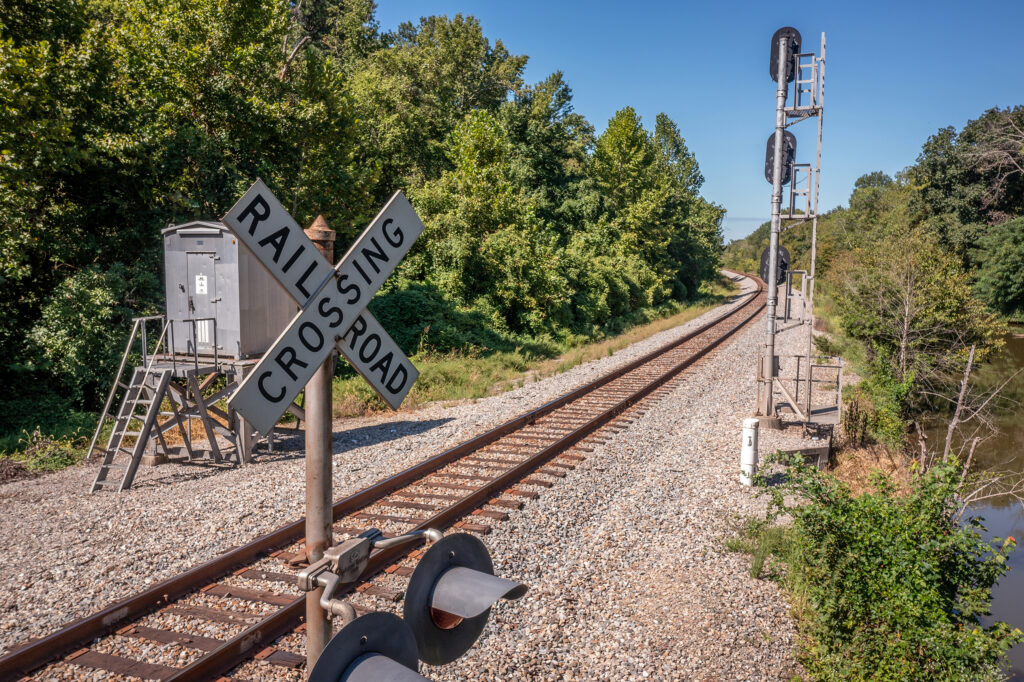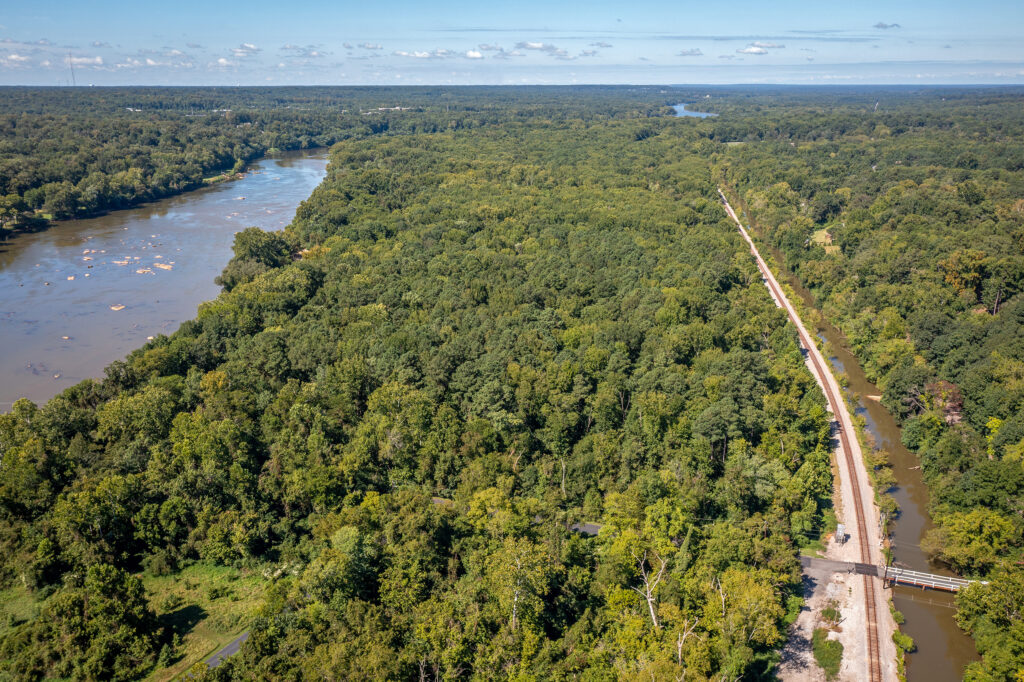









In a grassy field along the Kanawha Canal, birds chirped while monarch butterflies fluttered, displaying their magnificent colors. First proposed by George Washington as a young surveyor prior to the American Revolution, the canal system locally parallels the James River for 7 miles. In Henrico County, it’s largely remained an inaccessible, overlooked relic of history.
That could begin to change as CSX is donating 5.2 miles of the canal to Henrico. Officials announced the plan for the 65-acre property during a news conference held Sept. 26 near the canal’s western edge at the Roslyn Retreat Center.
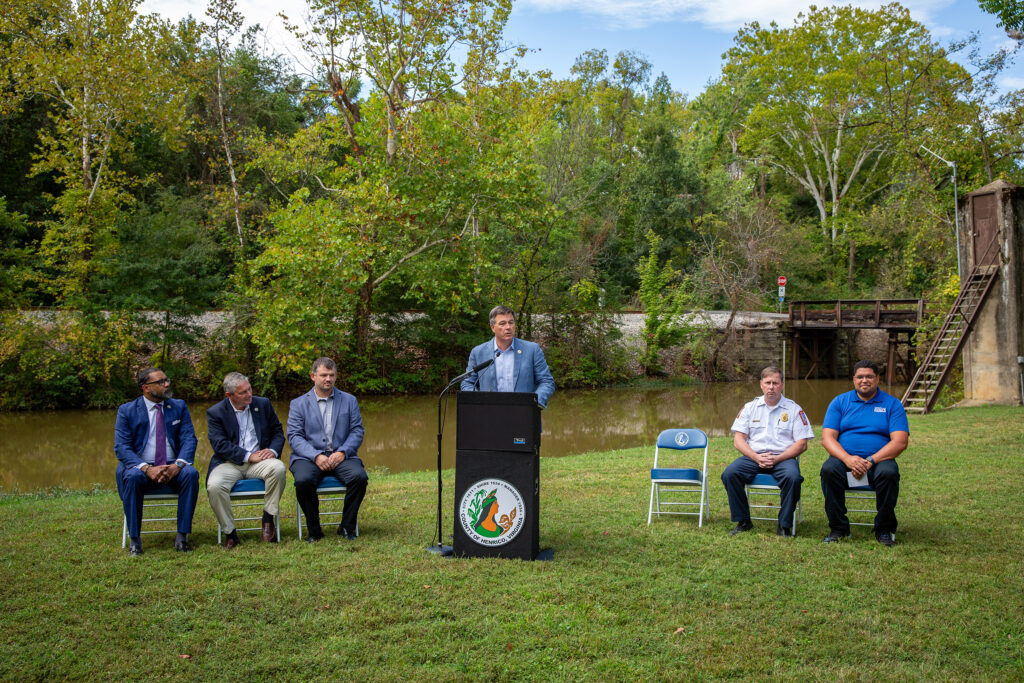
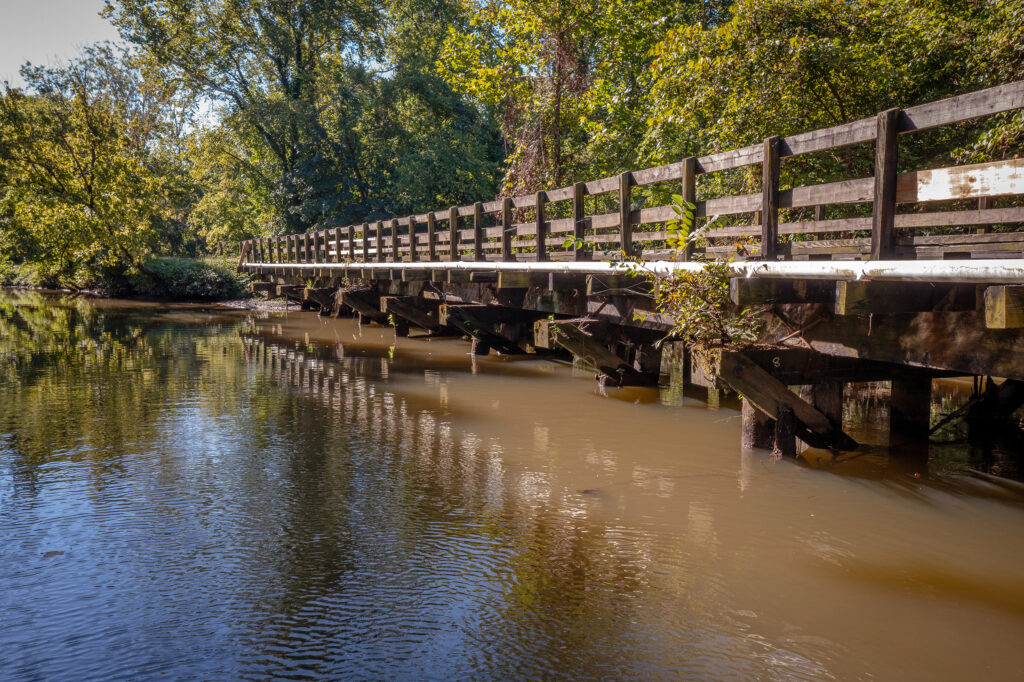
Tuckahoe District Supervisor Jody K. Rogish noted that in addition to preserving a historical feature that dates to 1785, Henrico will be responsible for the maintenance of bridges located on the property.
“By sharing the load, Henrico County will continue its long history of protecting people and property and preserving our history in our beautiful natural environment,” he said.
Rogish also suggested that public access could eventually be possible. “Who knows, we may be able to provide some recreational access as part of this region’s wonderful asset, the James River,” he said.
Rogish thanked his colleagues on the Board of Supervisors for authorizing the county to accept the property.
The decaying bridges over the canal pose a significant public safety challenge because they are no longer sufficient to carry the weight of modern fire engines, leaving homes and private property along the riverfront vulnerable, Deputy Fire Chief Jim Courtney said.
“We’re excited about this move with CSX,” he said. “We use this area regularly when we need to get boats in the water for emergency operations.”
The Kanawha Canal played a vastly different role nearly 250 years ago. It dates to 1785 and the founding of the James River Company, whose honorary president was George Washington. In 1835, the James River and Kanawha Canal Company was established to construct a system of canals to connect the James with the Kanawha River in West Virginia.
The canals supported transportation of tobacco by bateau, which would return with furniture, dishes and clothing, said Julian Charity, director of the History, Heritage and Natural Resources Division with the Division of Recreation & Parks.
In doing so, “the canal united Virginia’s frontier with its economic and political center in Richmond” before being supplanted by the railroad system, he said.
“During the Industrial Age, the railroad continued to bring those goods and the people together,” Charity said.
Rogish concluded his remarks by presenting a plaque of appreciation to Michael Liebelt, CSX project manager for Washington, Virginia, North Carolina and West Virginia.
“At CSX, we take pride in being a good neighbor in the communities we serve,” said Randy J. Marcus, CSX’s director of state relations for Virginia, West Virginia and D.C. “This initiative not only benefits Henrico residents who use these bridges but also opens the door to future recreational opportunities, all while ensuring CSX continues to provide safe, reliable freight service.”