
Henrico County Trail Markers share our history. Find out more about each, and their location within the county.
See also, Civil War Era.
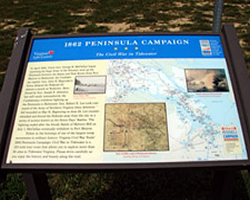
In April 1862, Union Gen. George B. McClellan began marching his huge Army of the Potomac west up the Peninsula between the James and York Rivers from Fort Monroe to Richmond, the Confederate capital. Follow in the footsteps of one of the largest troop movements in military history.
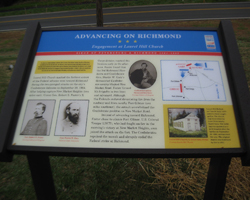
Laurel Hill Church marked the farthest extent of the Federal advance west toward Richmond during the two-pronged attacks on the city’s Confederate defenses on September 29, 1864. The Confederates repulsed the assault and abruptly ended the Federal strike at Richmond.
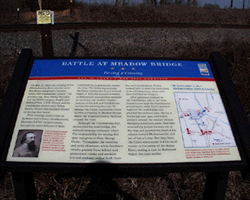
On May 12,1864, this crossing of the Chickahominy River was the scene of a sharp engagement between Union and Confederate cavalry.

Battle of Darbytown (New Market) Road, One Last Advance
The last advance by the Army of Northern Virginia north of the James River took place directly across New Market Road in October 1864, on orders of Confederate Gen. Robert E. Lee.
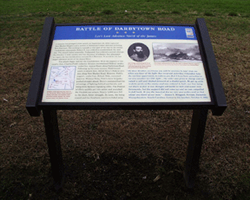
A massive two-pronged Union attack on September 29, 1864, captured New Market Heights and a section of Richmond’s outer defenses including Fort Harrison.
On the night of June 27, 1862, following the battle of Gaine’s Mill, Gen. George McClellan ordered a withdrawal of his Union army to the James River.
In May 1862, Gen. George McClellan’s Union army was poised on the outskirts of Richmond threatening the Confederate capital.
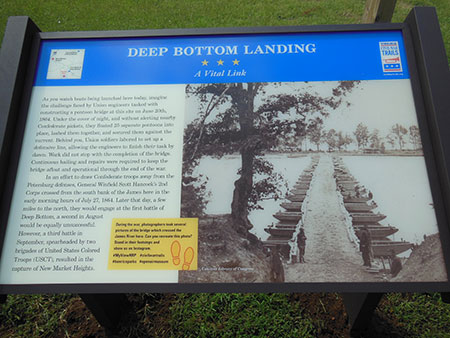
After the Battle of Cold Harbor in June 1864, Grant and Lee shifted their armies to Petersburg; but Grant did not wish to abandon the Richmond front entirely.
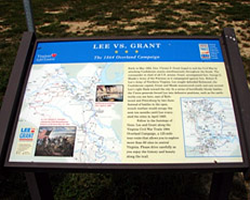
Early in May 1864, Gen. Ulysses S. Grant hoped to end the Civil War by attacking confederate armies simultaneously throughout the South.

Union Gen. Philip Sheridan used the Mountain Road during his 1864 raid toward Richmond. His lengthy column of 12,000 horsemen passed here on the morning of May 11.
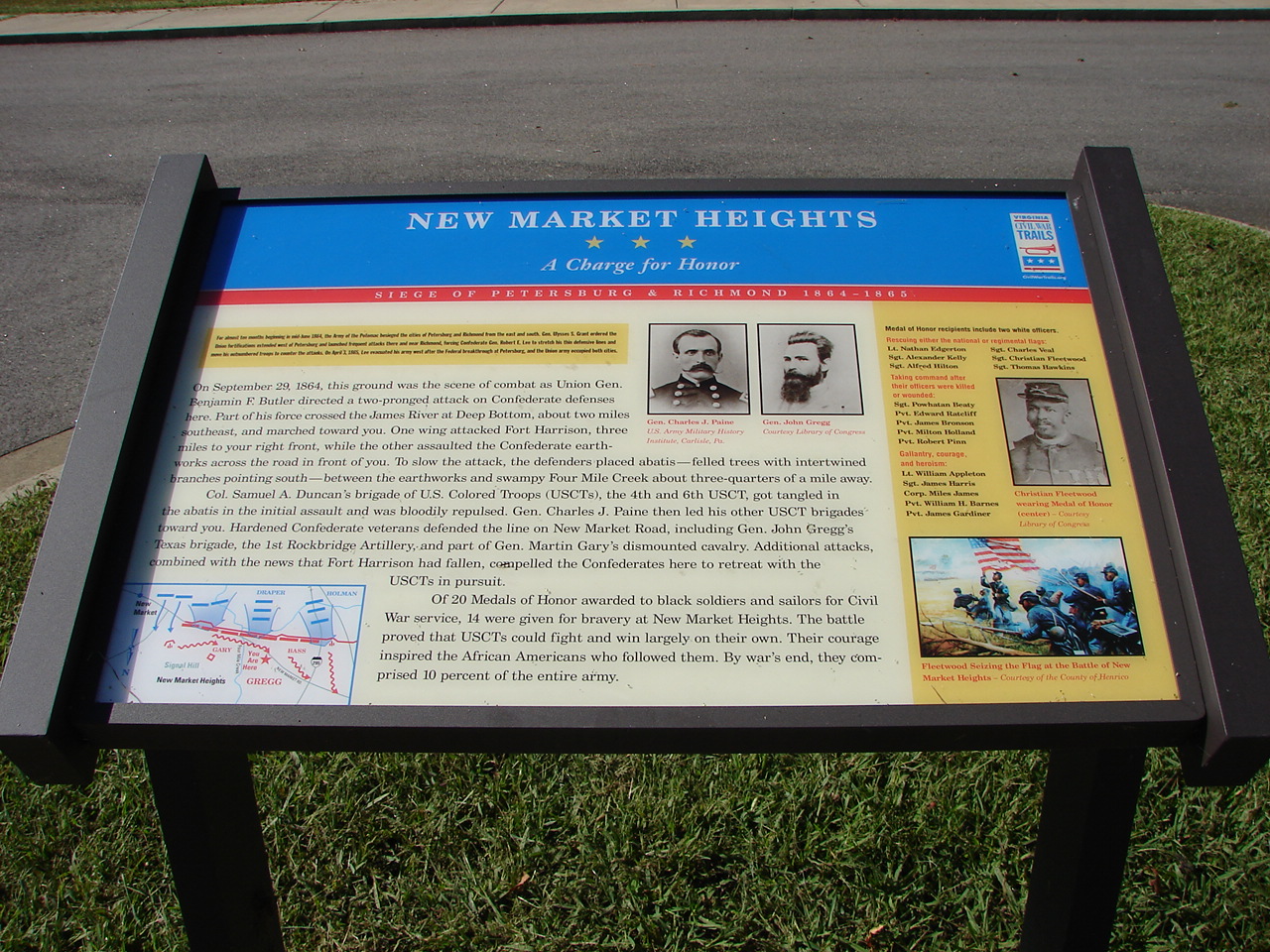
New Market Heights
On September 29, 1864, this ground was the scene of combat as Union Gen. Benjamin F. Butler directed a two-pronged attack on Confederate defenses
here.
Confederate Attacks on May 31,1862, designed to push the Union army away from Richmond, struck an isolated wing of the Federal Fourth Corps in this vicinity.
At 5 A.M. on June 12, 1862, Confederate Gen., J.E.B. Stuart and 1,200 cavalrymen, including several who knew the local roads, left their camps on the Mordecai and Young farms. The fortifications were part of the outer defensive line that protected the Confederate capital of Richmond.
Between June 12 and June 28, 1862, Union Gen. George B. McClellan maintained his headquarters at the Trent House. Known as “Reynoldsville,” the house dates from about 1825.
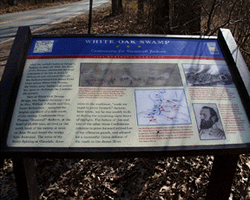
After the twilight battle at Savage’s Station on June 29, 1862, the Army of the Potomac abandoned the final remnants of its line in front of Richmond and retreated through the darkness toward the James River.
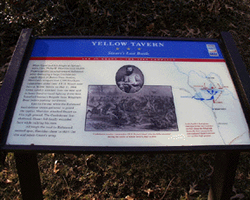
While Grant and Lee fought at Spotsylvania, Gen. Philip H. Sheridan took 12,000 Federal cavalry on a raid toward Richmond.