
Henrico County Markers share our history. Find out more about each, and their location within the county.
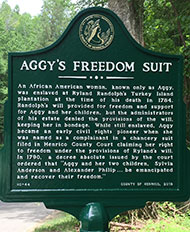
An African American woman, known only as Aggy, was enslaved at Ryland Randolph's Turkey Island plantation at the time of his death in 1784. While still enslaved, Aggy became an early civil rights pioneer.
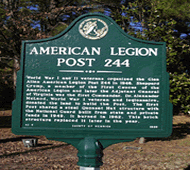
World War I and II veterans organized the Glen Allen American Legion Post 244 in 1946. It burned in 1962. This brick structure replaced it later in the year.
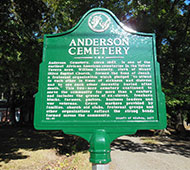
Anderson Cemetery, circa 1867, is one of the earliest African American cemeteries in the Yellow Tavern area.
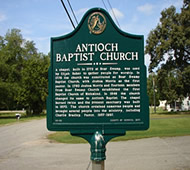
A chapel, built in 1772 at Boar Swamp, was used by Elijah Baker to gather people for worship.
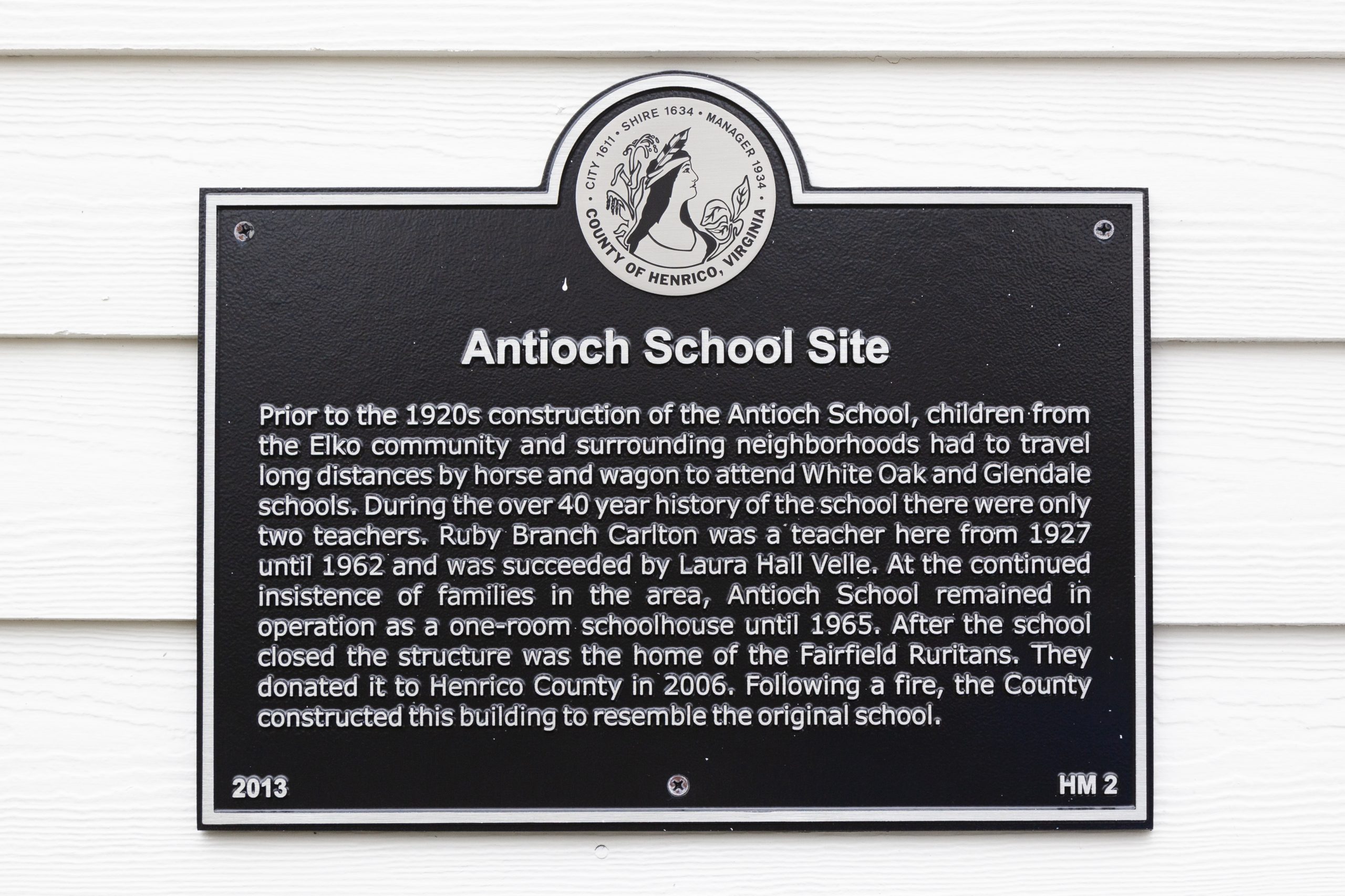
Prior to its 1920s construction, children who lived in the Elko community had to travel long distances by horse and wagon to attend White Oak and Glendale schools.
Edward J. Warren, a farmer, was the first owner of the house on 100 acres in 1858. Warren, a private in the 34th Virginia Infantry, was captured by Union Troops and held prisoner at Fort Monroe.
In 1828, nine people organized a Sunday school in a log schoolhouse, five miles from the Richmond City limits.
Captain Thomas Harris came to the Jamestown Colony from England in May 1611 on the ship Prosperous with Sir Thomas Dale.
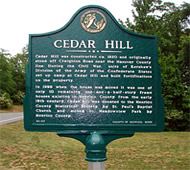
Cedar Hill was constructed ca. 1820 and originally stood off Creighton Road near the Hanover County line.
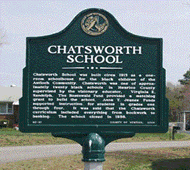
Chatsworth School was built circa 1915 as a one-room schoolhouse for the black children of the Antioch Community.
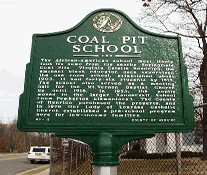
The African-American school most likely took its name from the nearby Springfield Coal Pits. The one room school established about 1905 was once supervised by Virginia Estelle Randolph, the eminent black educator.
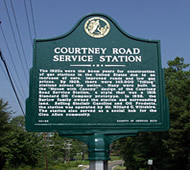
The 1920s were the boom years for construction of gas stations in the United States due to an increase of cars, improved roads and low gas prices.
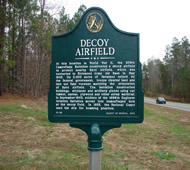
In World War II, the 936th Camouflage Battalion constructed a decoy airfield to protect nearby Byrd Airfield which was converted to Richmond Army Air Base in May 1943.
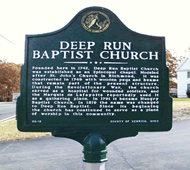
Founded here in 1742, Deep Run Baptist Church was established as an Episcopal chapel. Modeled after St. John’s Church in Richmond, it was constructed in 1749 with wooden pegs and beams that remain part of the present structure.
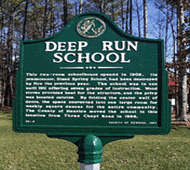
This two-room schoolhouse opened in 1902. Its predecessor, Stand Spring School, had been destroyed by fire the previous year. The school was in use until 1911 offering seven grades of instruction.
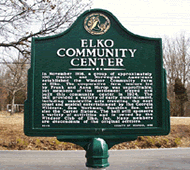
In November 1916, a group of approximately 100 Danish and Norwegian Americans established the Windsor Community Farm at Elko.
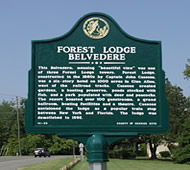
This Belvedere, meaning “beautiful view”, was one of three Forest Lodge towers. Forest Lodge, constructed in the 1880s by Captain John Cussons, was a six-story hotel on 1000 acres in Glen Allen.
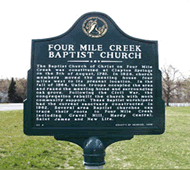
Four Mile Creek Baptist Church
The Baptist Church of Christ on Four Mile Creek was constituted at Clayton Springs on the 5th of August, 1781.
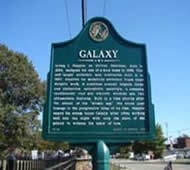
Irving L. Haggins, an African American, born in 1934, designed his one-of-a kind home in
1956. This self-taught architect and contractor built it in 1967.
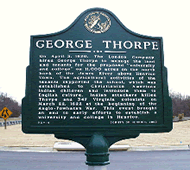
On April 3, 1620, The London Company hired George Thorpe to manage the land and tenants for the proposed “university and college” on 11,000 acres on the north bank of the James River above Henrico Town.
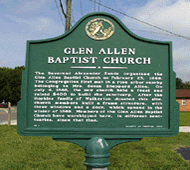
The Rev. Alexander Sands organized the Glen Allen Baptist Church on Feb 23,1868. The congregation first met in a rose arbor belonging to Mrs. Susan Sheppard Allen.
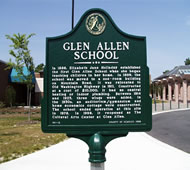
In 1886, Elizabeth Jane Holladay established the first Glen Allen School when she began teaching children in her home. In 1999, it reopened as The Cultural Arts Center at Glen Allen.
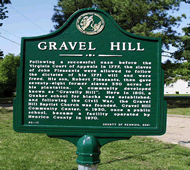
Following a successful case before the Virginia Court of Appeals in 1777, the slaves of John Pleasants were allowed to follow the dictates of his 1771 will and were freed. His son, Robert Pleasants then gave seventy-eight former slaves 350 acres of his plantation.
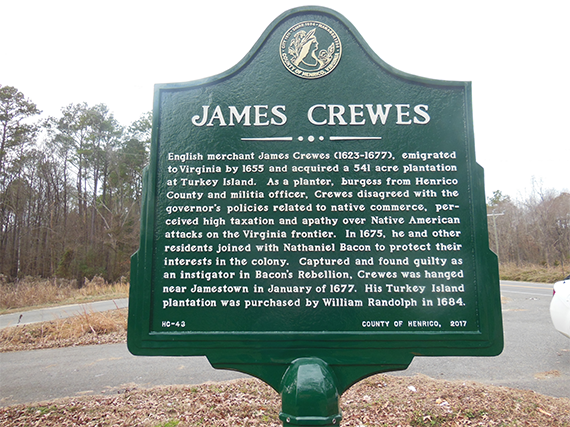
English merchant James Crewes (1623-1677), emigrated to Virginia by 1655 and acquired a 541 acre plantation at Turkey Island.
Near this location stood Chickahominy Farm, the country residence of U. S. Chief Justice John Marshall. Spending weekends at the farm with his wife, Marshall wrote that farming provided many hours of “laborious relaxation.”
In 1852, Joseph and Elizabeth Tyree owned this 400 acre tract of land known as “Woodstock.” After changing hands several times, the Locomotive Club of Richmond purchased 208 acres of the property and built this clubhouse in 1925.
The Markel Corporation commissioned architect Haig Jamgochian, a Richmond native, to design their headquarters in 1962.
In 1947 the Maybelle Carter family bought the home at 4101 Old Springfield Road here in Glen Allen, Virginia.
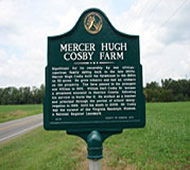
Significant for its ownership by one African-American family dating back to the late 1800s, Mercer Hugh Cosby built the farmhouse in the 1880s on 52-acres. He grew tobacco and had an orchard on the property.
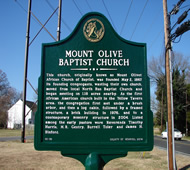
This Church, originally known Mount Olivet African Church of Baptist, was founded May 2, 1867. Its founding congregants, wanting their own church, moved from local North Run Baptist Church and began meeting on 1.18 acres nearby.
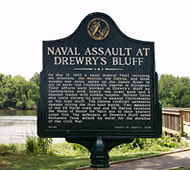
On May 15, 1862 a small federal fleet including the ironclads, the Monitor, and Galena, and three wooden war ships sailed up the James River to try to enter the Confederate capital at Richmond.
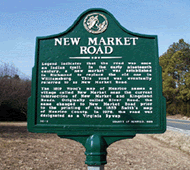
Legend indicates that the road was once an Indian trail. In the early nineteenth century, a “new market” was established in Richmond to replace the old one in Williamsburg. This road was eventually referred to as New Market Road.
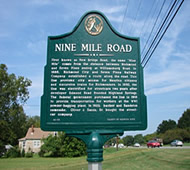
First known as New Bridge Road, the name “Nine Mile” comes from the distance between Richmond and Seven Pines ending at Williamsburg Road. In 1888, Richmond City and Seven Pines Railway Company established a route along the road.
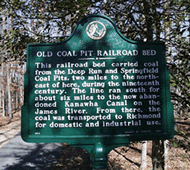
This railroad bed carried coal from the Deep Run and Springfield Coal Pits, two miles to the northeast of here, during the nineteenth century.
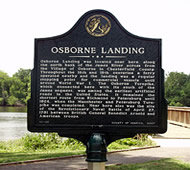
Osborne Landing was located near here along the north bank of the James River across from the Village of Osborne in Chesterfield County.
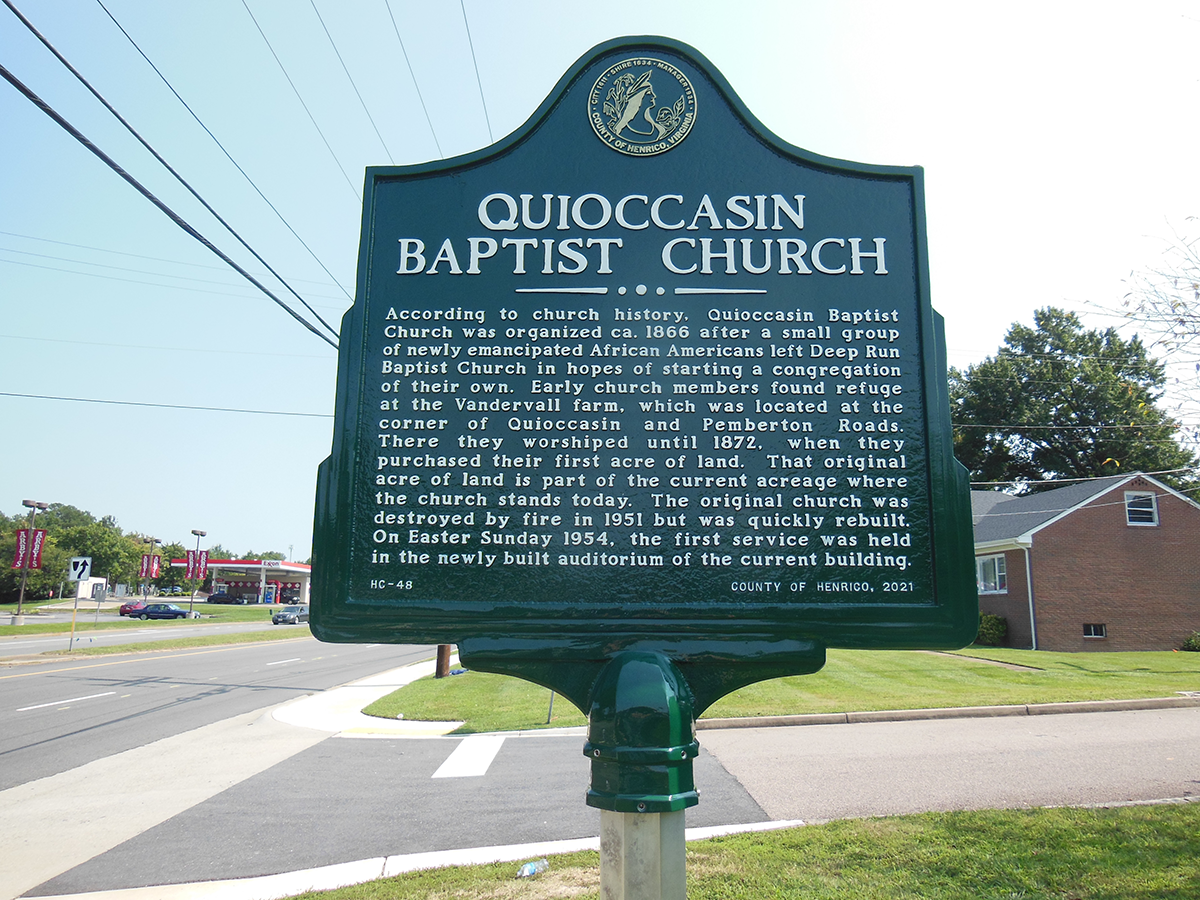
According to church history, Quioccasin Baptist Church was organized ca. 1866 after a small group of newly emancipated African Americans left Deep Run Baptist Church in hopes of starting a congregation of their own.
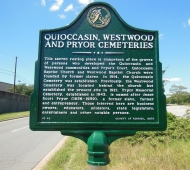
Quioccasin, Westwood and Pryor Cemeteries
This sacred resting place is comprised of the graves of persons who developed the Quioccasin and Westwood communities and Pryor’s Court.
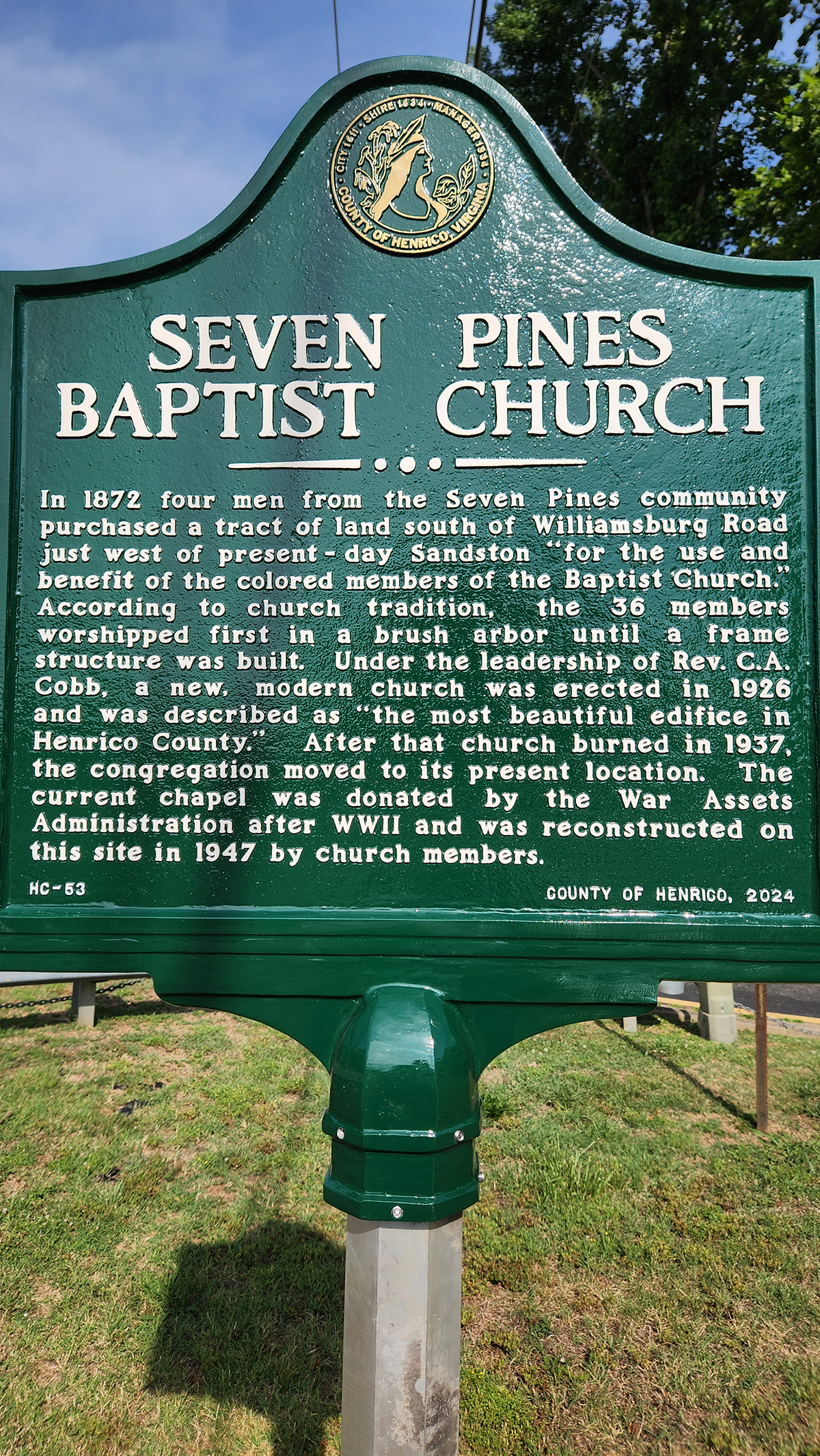
In 1872 four men from the Seven Pines community purchased a tract of land south of Williamsburg Road just west of present-day Sandston "for the use and benefit of the colored members of the Baptist Church."
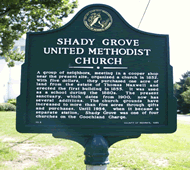
A group of neighbors, meeting in a cooper shop near the present site, organized a church in 1852. With five dollars, they purchased one acre of land from the estate of Thomas Maxwell and erected the first building in 1855.
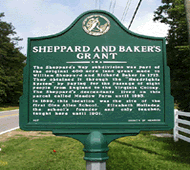
The Sheppard’s Way subdivision was part of the original 400 acre land grant made to William Sheppard and Richard Baker in 1713. They obtained it through the “Headrights System” by paying for the passage of eight people from England to the Virginia Colony.
According to legend, just beyond the fork where the Deep Run Turnpike crossed Three Notched Road stood a tavern which was built in 1815. Here, under the rickety old double porch of the rambling frame structure was a short-handled pump.
Grey Skipwith, Sr., a midshipman in the Confederate navy purchased the original site, formerly “Fort Hill”, a Civil War parade ground, in 1890.
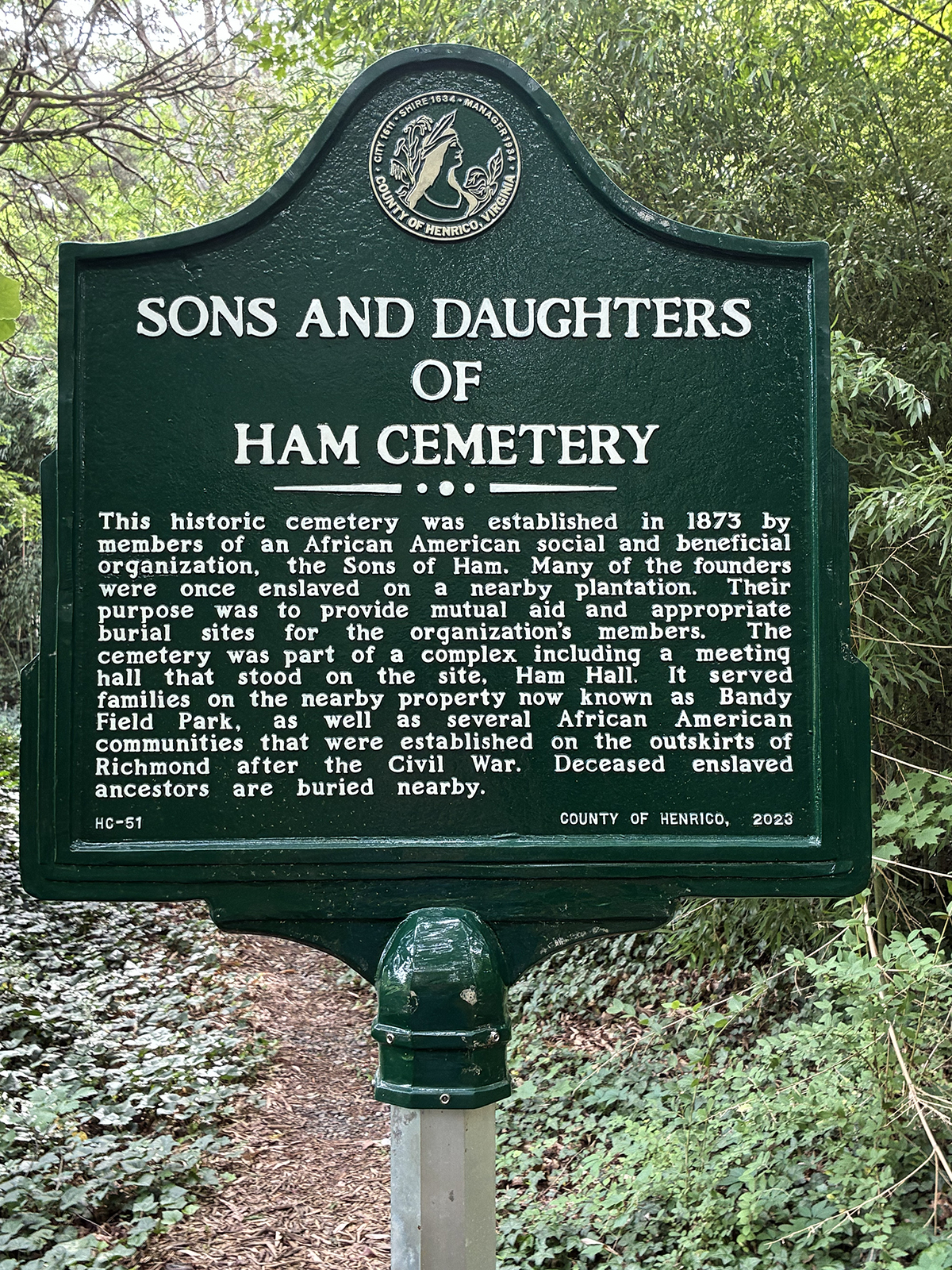
Sons and Daughters of Ham Cemetery
This historic cemetery was established in 1873 by members of an African American social and beneficial organization, the Sons of Ham.
African-American students attended this two-room 1920s structure. It was one of approximately 22 schools under the supervision of the pioneer educator, Virginia E. Randolph.
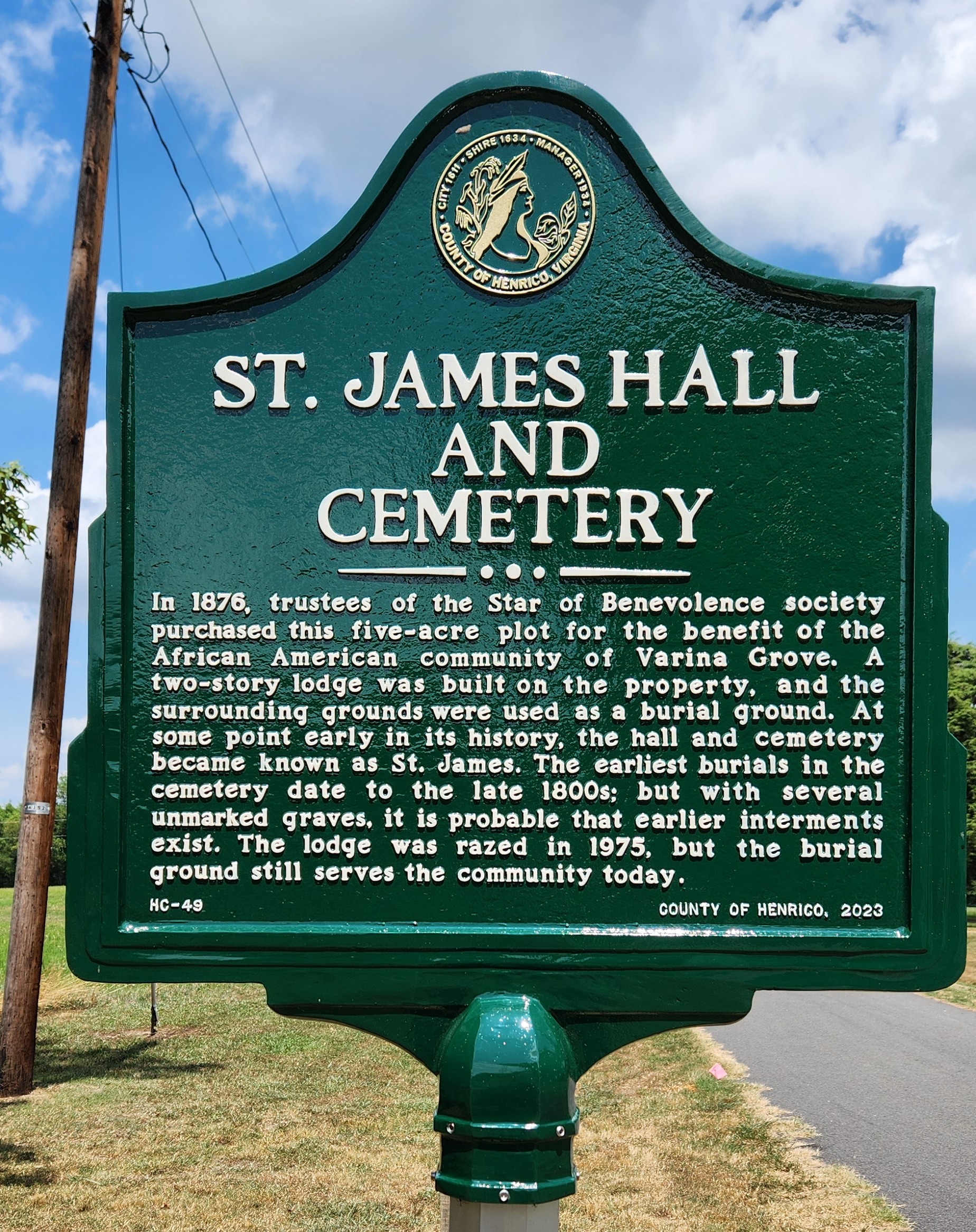
In 1876, trustees of the Star of Benevolence society purchased this five-acre plot for the benefit of the African American community of Varina Grove. A two-story lodge was built on the property, and the surrounding grounds were used as a burial ground.
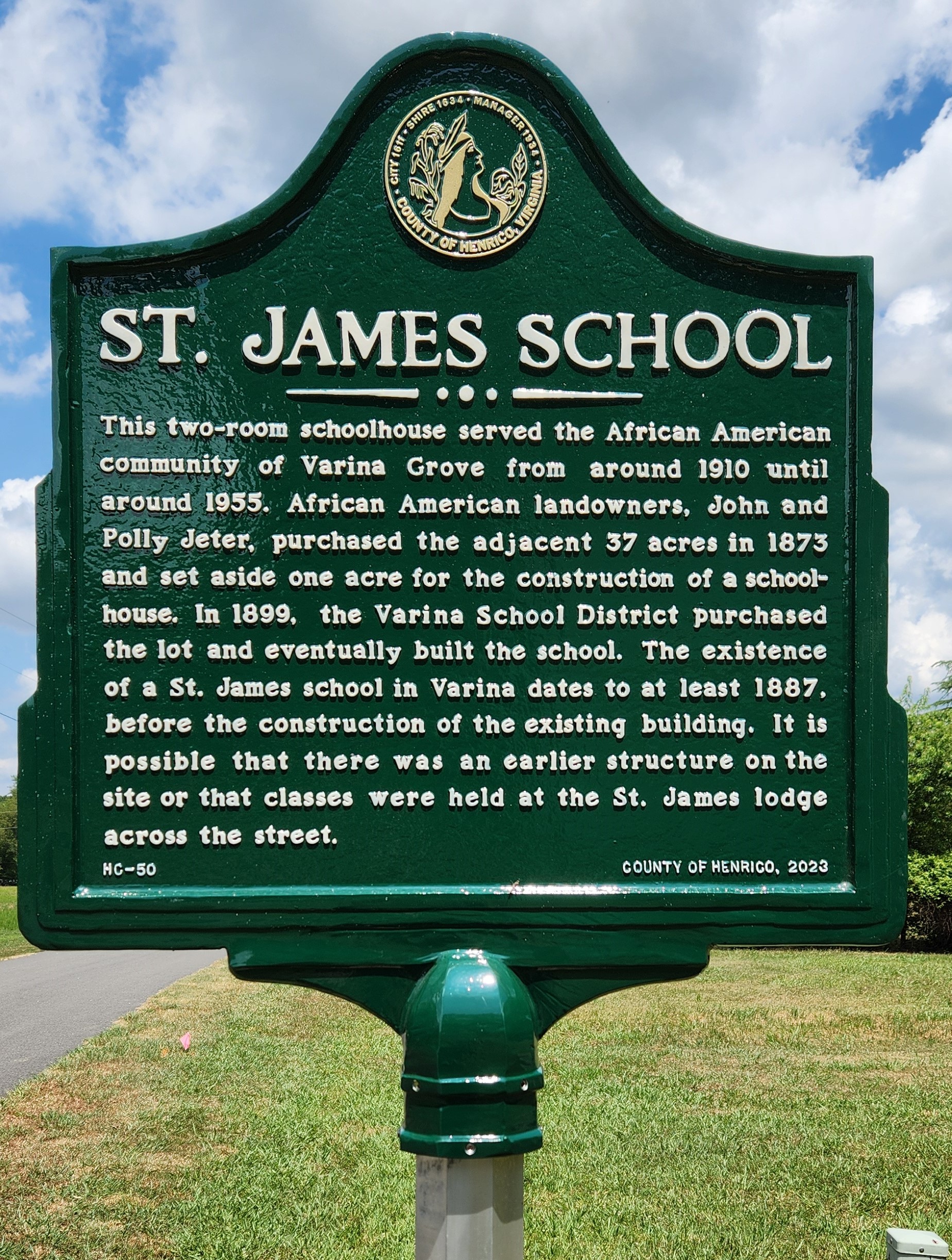
This two-room schoolhouse served the African American community of Varina Grove from around 1910 until around 1955. African American landowners purchased the adjacent 37 acres in 1873 and set aside one acre for the construction of a schoolhouse.
William Ferguson and wife Myrtle Deane purchased Malvern Hill farm in 1942. The family was a steward of the land and its history for nearly 75 years.
On May 27, 1771, a wall of water came roaring down the James River valley following ten to twelve days of intensive rain. About one hundred fifty people were killed as the river reached a flood stage of forty-five feet above normal.
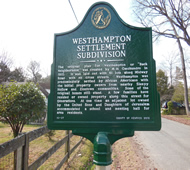
The original plan for Westhampton or "Back Neighborhood" was created by M. H. Omohundro in 1910. Some of the original homes still stand. A few families have resided or owned property along this street for generations.
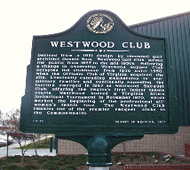
Derived from a 1921 design by renowned golf architect Donald Ross, Westwood Golf Club served the public from 1927 to the mid-1930′s. Following a change in ownership, Westwood Supper Club occupied the clubhouse from 1936 until 1950, when the Officers Club of Virginia acquired the site.
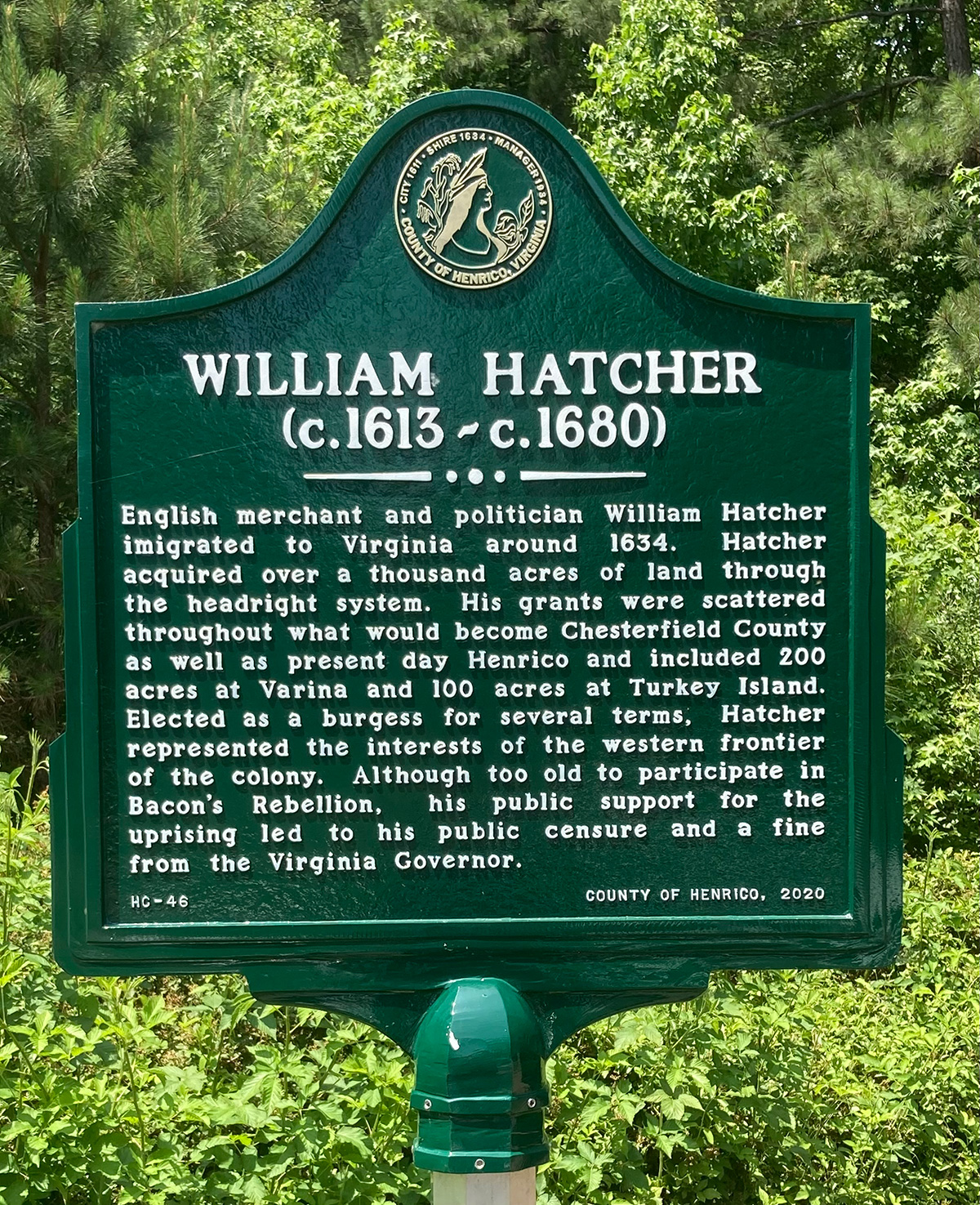
English merchant and politician William Hatcher immigrated to Virginia around 1634. Hatcher acquired over a thousand acres of land through the headright system.
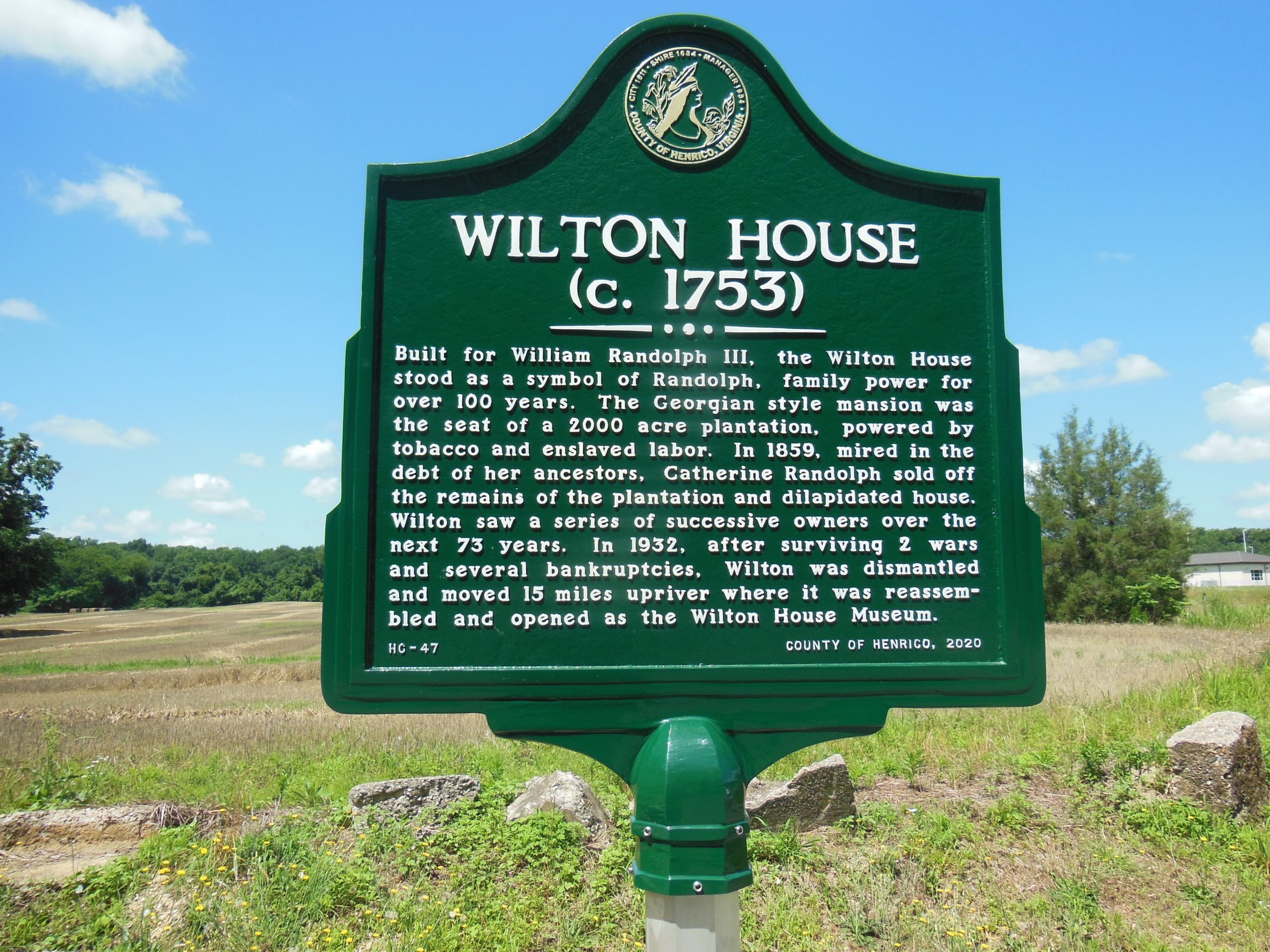
Built for William Randolph III, the Wilton House stood as a symbol of Randolph, family power for over 100 years. The Georgian-style mansion was the seat of a 2,000 acre plantation, powered by tobacco and enslaved labor.
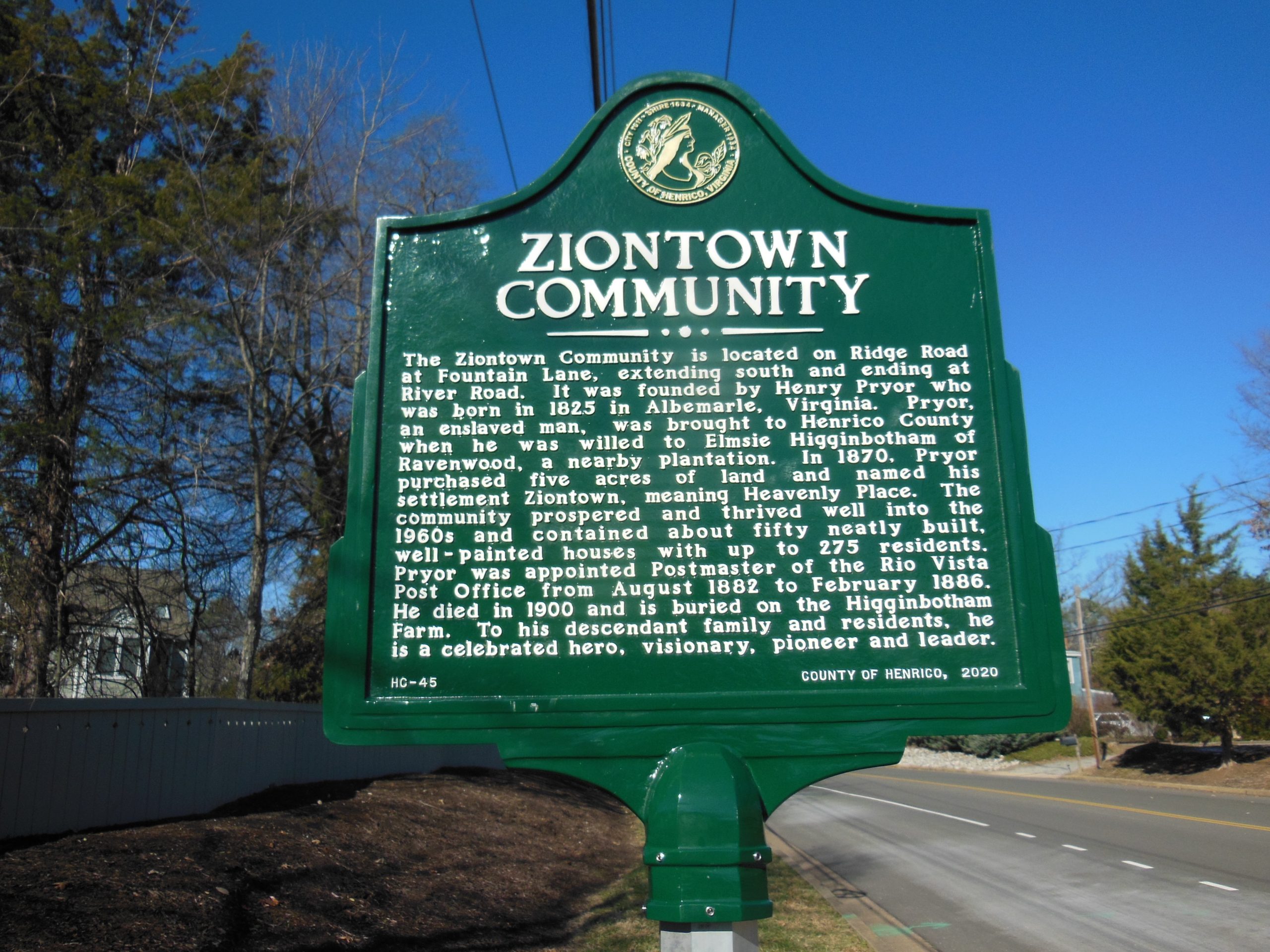
The Ziontown Community is located on Ridge Road at Fountain Lane, extending south and ending at River Road. It was founded by Henry Pryor who was born in 1825 in Albemarle, Virginia.