


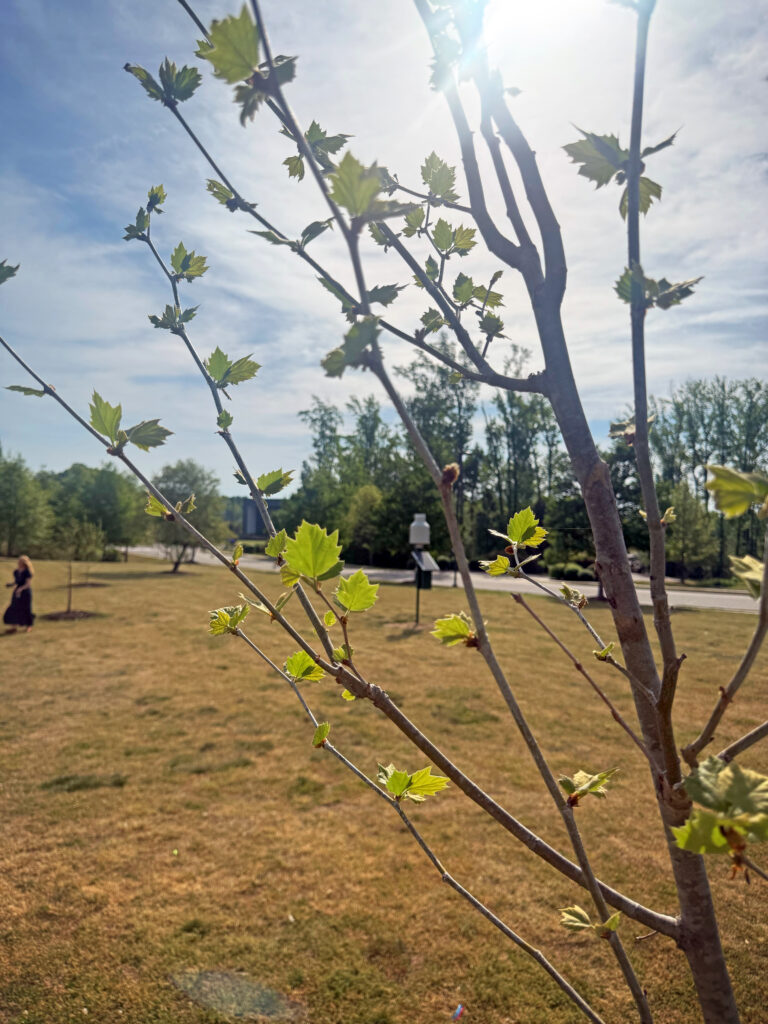
As a welcome sign of spring, bright green leaves have emerged on a young tree at the Eastern Henrico Recreation Center.
The spindly American hophornbeam tree is one of about 70 new trees planted across the 11-acre grounds – near the playground and stormwater detention pond, along the sidewalks of Laburnum Avenue and in the grassy parking lot islands.
“Parking lots are very, very hot, and oftentimes they do not have trees,” said Sam Hudson, director of Henrico’s Sustainability Division. “And so that is one of our bigger pushes, … to bring our county more trees.”
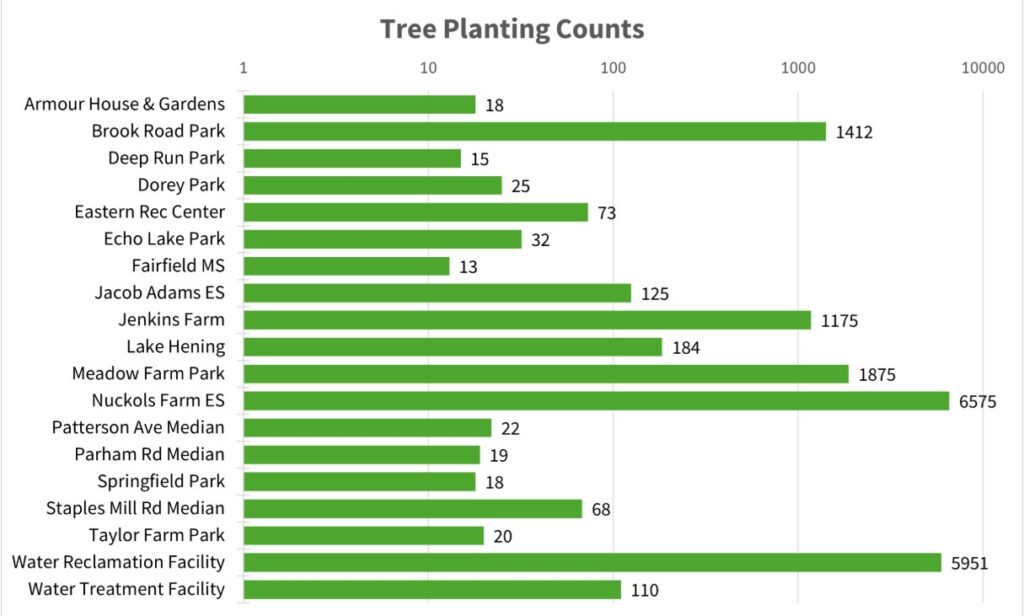
In fact, it’s been a lot more. With the support of its nonprofit partner Capital Trees and hundreds of volunteers, Henrico has planted nearly 18,000 trees since launching its reforestation program in 2023.
The effort aims to enhance and reestablish tree canopies and forests on county-owned sites. Officials see considerable benefits: a more beautiful and resilient environment and landscape; less soil erosion; better air and water quality; improved public health; more shade and relief from heat islands and noise; and more natural areas where wildlife can thrive.
The program focuses on species that are native to Virginia because they require minimal upkeep and are conditioned to the area’s climate and environment. So far, trees have been added at 19 sites, including schools, parks, roadway medians and other properties, such as the county’s Water Treatment Facility and Water Reclamation Facility.
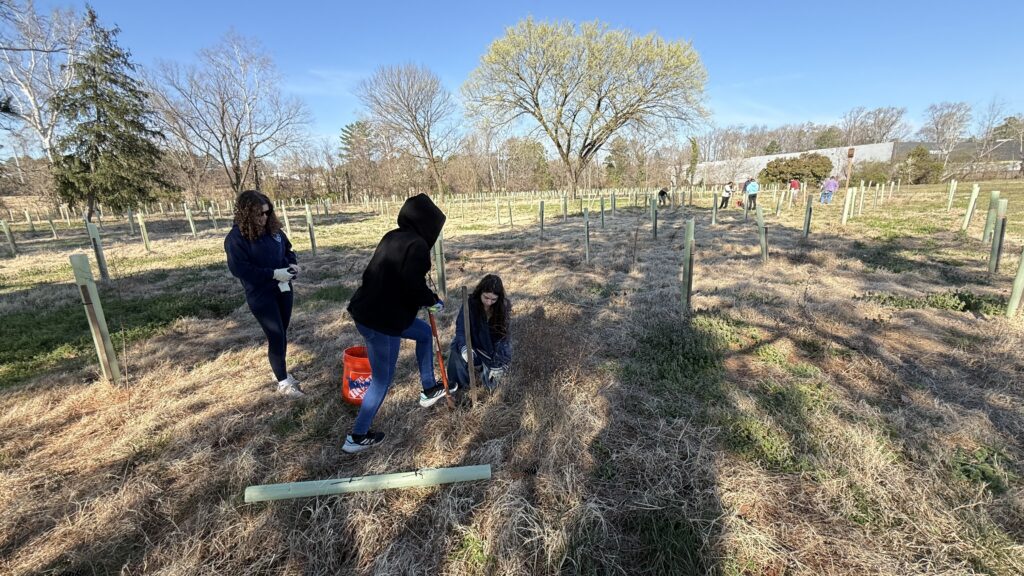
“We’ve gotten hundreds of volunteers and community members [and] groups that have come out to help us put these trees in the ground,” Hudson said. It’s just “really, really inspiring to see young kids out there with their parents [who are] kind of figuring out how far do you put a seedling into the ground so that it doesn’t die and so that it will survive?”
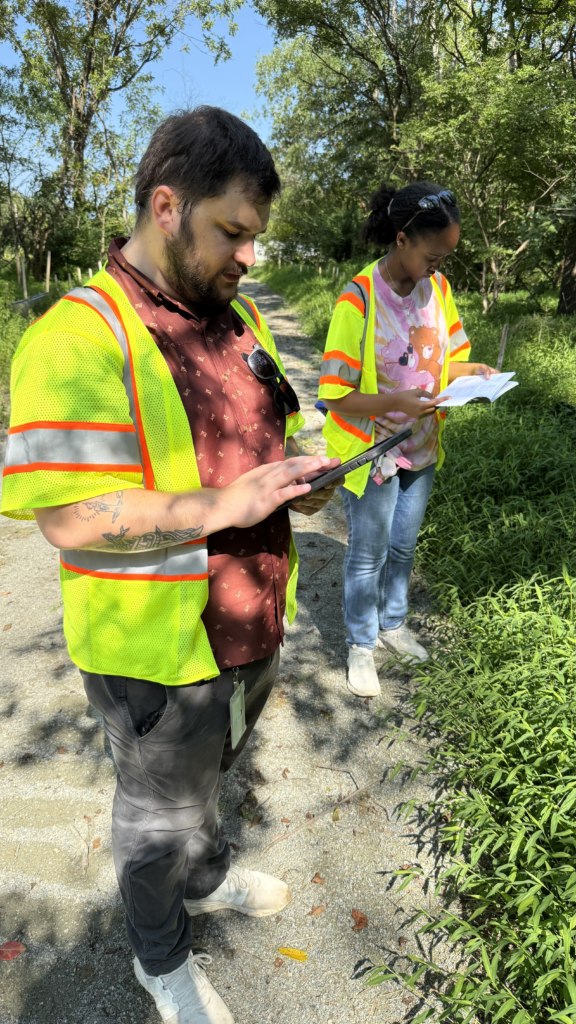
In addition to the plantings, the program provides education and uses data from tree inventories conducted at the sites.
“We have Capital Trees come in and teach staff, students and community members how to identify different trees,” Hudson said. “And so, that’s always a really neat opportunity to see people really light up when they can look at a leaf and determine what kind of tree it is.”
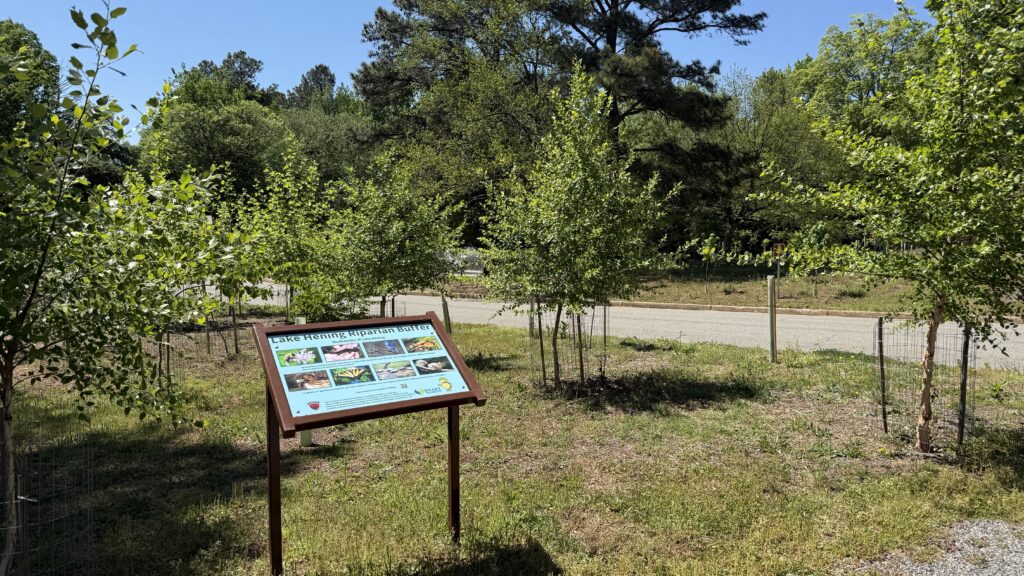
The plantings kicked off in late 2023 at Lake Hening, on the campus of the Henrico County Government Center. On a chilly December morning, volunteers set about 180 native trees and shrubs in the ground to restore a natural buffer around the lake and improve water quality in nearby creeks and streams.
“Honestly, it was our first go at it, and so we weren’t totally sure how it would work out,” Hudson said. “We planted seedlings there. They started out at about a foot tall, and now we have trees that are well overhead – 10 feet tall, and the program has really grown from there.”
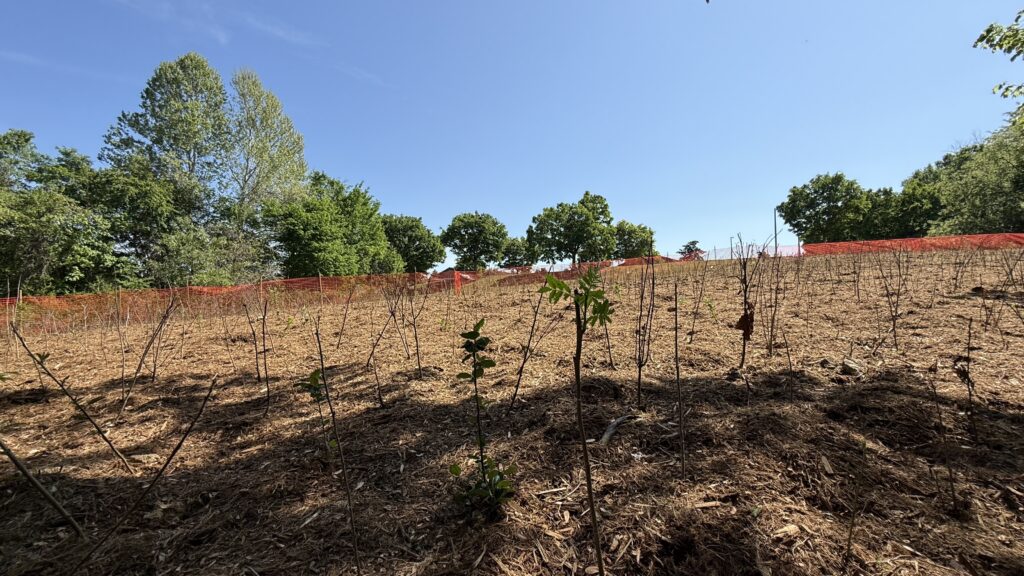
So far in 2026, more than 10,000 trees have been planted. That includes more than 6,500 seedlings that will grow to create a “micro-forest” at Nuckols Farm Elementary School.
By arranging them densely, the seedlings will learn to “compete for resources, and they’ll become a mature forest in about 10 to 20 years – so at about half the time it takes a regular forest,” said Shelly Barrick Parsons, executive director of Capital Trees.
The reforestation program is part of Henrico’s sweeping initiative to promote sustainability and environmental resiliency in the county. The county’s efforts run the gamut – preserving land, installing solar panels on public buildings and, in collaboration with Dominion Energy, on qualifying homes; designing schools, libraries and other facilities to environment-friendly LEED standards; restoring streams and organizing cleanups; promoting the use of energy efficient LED light bulbs; and providing grants to local nonprofits to support community sustainability projects.
In addition, Henrico is developing its first climate action and adaptation strategy. It also recently introduced the first electric vehicle to its fleet and is planning to install public-use charging stations at more than a half-dozen facilities.
The efforts are guided by the Sustainability Division, with input and support from two committees. Henrico’s Environmental Action Resource Team (HEART) includes members from county departments. The Sustainability and Resilience Advisory Committee consists of residents appointed by the Board of Supervisors.
Before planting trees at a site, project officials assess the property and consider what species would thrive based on the type of soil, sun exposure and other conditions. At the Eastern Henrico Recreation Center, for example, bald cypress trees were planted by the stormwater detention pond because they flourish in wet soil. Trees also were planted along a trail that’s used by residents who walk to the recreation center from neighborhoods along Laburnum.
“So, all of that will make that walking trail a cooler and healthier place to be,” Barrick Parsons said.
Expanding community access to abundant trees and lush green spaces offers benefits far beyond a cooler, more sustainable environment, she said. A healthy green space also builds stronger communities.
“People are happier. Outcomes in school are better. But most importantly, people get outside, and they meet their neighbors,” she said. “They have a higher trust in their neighbors and in government, and they just overall feel better. And so that’s why, to me, this is so important. The work we do really brings communities and neighbors together.”
For more information on Henrico’s reforestation program, including opportunities to volunteer, visit https://henrico.gov/works/sustainability-division/reforestation-and-tree-planting/.